Our healthcare system is simply not working as it should, but it’s not for a lack of trying. Millions upon millions of dollars have been raised for connected platforms that promise to reduce fragmentation and improve patient access. Workplace wellness programs focused on supporting healthier lifestyles are pervasive. A digital health revolution has produced more than 350,000 new point solutions, each aimed at addressing specific conditions.
Here’s the problem. Despite all this energy and expense, we have little to show for it. During this time of technological advances and extreme innovation, life expectancy in the U.S. is falling behind peer countries, and chronic disease prevalence continues to trend upward.
At the end of the day, the most powerful lever we have to turn the tide on poor health outcomes is primary care. Approximately 85% of healthcare needs for the average individual can be met in a primary care setting. Additionally, the majority of costs associated with chronic disease could be avoided by disease prevention efforts in a primary care setting.
Unfortunately, primary care in the U.S. has lost its way. It has atrophied. Currently, there are issues with both access to care and the design of care delivery. Primary care is in need of a transformation. The good news is this is starting to happen.
A convergence of terms and trends such as direct primary care, concierge medicine, and on-site/near-site health clinics has created the opportunity to revitalize the practice of primary care. All of these models have one thing in common: they are striving to create a deeper relationship between patients and physicians and remove many of the existing barriers to care.
These approaches are a great start, but they don’t fully transform primary care.
With this backbone, we also need to layer on the smart use of technology to increase the personalization of care and the ability for physicians to support the health of entire patient populations. We must leverage key tenets from value-based care models to align incentives and prioritize what’s right for patients. We also must set a higher bar for the overall patient experience so that we make healthcare a joyful, warm, convenient, welcoming experience where people felt comfortable and confident in the care they received. And then we have to ensure widespread access to this type of care so that it is attainable for the average American.
Some people describe the culmination of these attributes as “advanced primary care”.
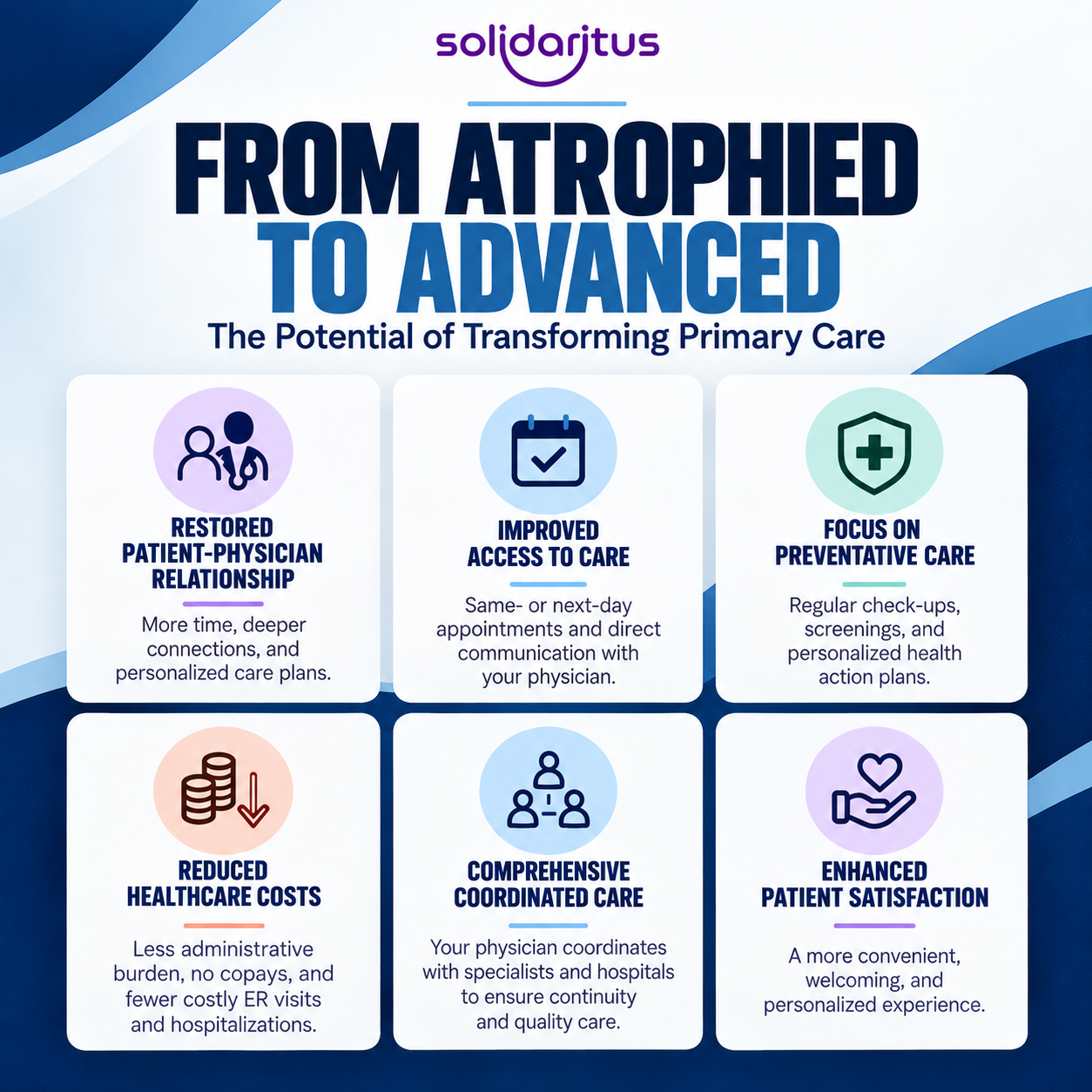
This effort represents a true re-imagination of how we deliver care in this country. It also offers unparalleled potential. With an advanced primary care model, the benefits are many. They include the following:
1. Restoration of the Patient-Physician Relationship
Traditional practices often overwhelm physicians with a high volume of patients, limiting the time they can spend with each individual. In contrast, advanced primary care practices serve a significantly smaller patient base, allowing for longer appointment times and more comprehensive examinations. This approach provides the time to establish personalized care plans and coaching, fostering a deeper understanding of each patient’s unique needs and concerns. By restoring the patient-physician relationship, advanced primary care enhances the quality of care.
2. Improved Access to Care
Advanced primary care offers same- or next-business-day appointments for acute issues, with no copays and direct access to personal physicians through phone, text, and email. This immediate access allows patients to address health concerns promptly, preventing minor issues from escalating into serious conditions. The convenience of quick communication ensures comprehensive and timely care.
3. Focus on Preventative Care
The “gift of time” provided in the advanced primary care model allows for a greater emphasis on preventive care. Regular check-ups, screenings, and personalized health action plans help prevent illnesses rather than merely treating them. By maintaining health and preventing chronic conditions, this model of care helps avoid chronic conditions that can be more difficult and costly in the long run.
4. Reduced Healthcare Costs
Efficiency can be gained in advanced primary care practices by eliminating insurance billing and reducing administrative costs. Family physicians in these settings are trained to work with patients of all ages and handle a wide range of procedures, such as skin biopsies, joint injections, simple laceration repairs, and ECGs—at no additional cost. This comprehensive service, along with discounted medications and lab tests, reduces the need for expensive ER visits and hospitalizations, leading to significant long-term savings.
5. Comprehensive Coordinated Care
While this model provides a broad array of services, there are instances where patients require specialized care. Your personal physician advocates and coordinates with specialists and hospitals to provide continuity of care and ensure quality. This comprehensive approach allows patients to receive the necessary care without falling through the cracks of a fragmented system and then return to the care of their personal physician for thorough monitoring and follow-up.
6. Enhanced Patient Satisfaction
The personalized attention, strong and trusted patient-physician relationships, improved access, lower costs, and concierge-level service lead to high patient satisfaction. Patients appreciate the comprehensive and personalized care they receive in an advanced primary care model.
By restoring the patient-physician relationship, improving access to care, emphasizing preventive measures, reducing costs, ensuring comprehensive care, and enhancing patient satisfaction, advanced primary care has the potential to change the trajectory of healthcare in the U.S. However, for this model take root and thrive, we must break down walls among healthcare stakeholders and encourage providers, employers, labor unions and patients to all work together toward common goals.
If you are an employer or labor union who wants to better understand what it would take to make an advanced primary care model available for the individuals you serve, we would love to set up a personal consultation. Contact us today to learn more.
Frequently Asked Questions
1. What is advanced primary care?
Advanced primary care is a healthcare model designed to improve the patient experience through personalized care, stronger patient-physician relationships, improved access, preventive services, and coordinated treatment. It combines technology, value-based care principles, and more accessible physician support to address patients’ healthcare needs more comprehensively.
2. How is advanced primary care different from traditional primary care?
Traditional primary care practices often manage large patient volumes, limiting the time physicians can spend with each individual. Advanced primary care practices serve smaller patient populations, allowing for longer appointments, personalized health plans, direct communication with physicians, and more comprehensive examinations.
3. How does advanced primary care improve access to healthcare?
Advanced primary care provides same- or next-business-day appointments for acute health concerns, along with direct access to personal physicians through phone, text, and email. This allows patients to address health issues promptly rather than waiting for an appointment or allowing minor concerns to become more serious.
4. Why is preventive care important in advanced primary care?
Preventive care helps identify potential health concerns before they develop into more serious conditions. Advanced primary care emphasizes regular check-ups, screenings, and personalized health action plans to help patients maintain their health and reduce the likelihood of developing costly chronic conditions.
5. Can advanced primary care help reduce healthcare costs?
Yes. Advanced primary care can help reduce healthcare costs by eliminating insurance billing and lowering administrative expenses. Physicians can also provide a broader range of services, discounted medications, and lab tests, helping reduce the need for expensive emergency room visits and hospitalizations.
6. How does advanced primary care coordinate specialized healthcare services?
When patients need specialized treatment, their personal physician helps coordinate care with specialists and hospitals. This approach supports continuity of care, helps patients navigate the healthcare system, and allows their primary care physician to monitor their progress and provide follow-up care.