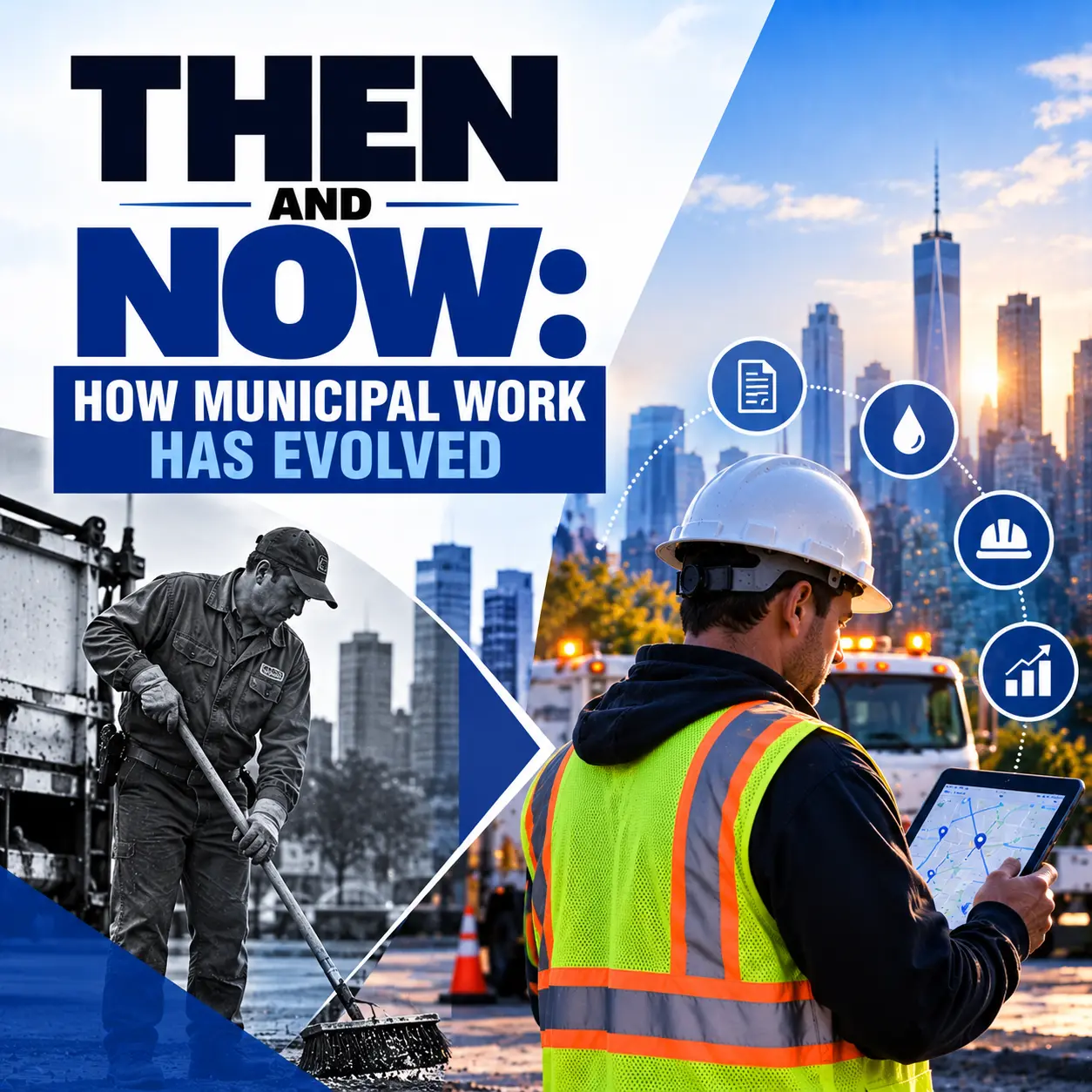
Do you remember when a city job meant a paper timesheet, a two-way radio, and a pension few questioned? Municipal work has evolved from paper records and hands-on tasks. It now uses digital tools, firm safety rules, clear data, and fast updates. The goal, however, has not changed. Local crews still keep water running, streets clear, parks safe, and schools open.
That scale is easy to miss. The Bureau of Labor Statistics reported a 37.8% union membership rate in local government for 2025. That was the highest rate in its report. Meanwhile, Census Bureau data put full-time local government employment at 11.4 million in March 2024. Its latest report shows 11.7 million in March 2025. These numbers show the scope of the workforce, but daily work tells the real story.
What a City Job Looked Like Then
Years ago, many city staff learned each task beside a skilled worker. They had fewer digital tools and less access to digital job data, while safety practices and requirements have continued to evolve. BLS began to track this data in 1983. At that time, 20.1% of workers belonged to unions. That figure covered 17.7 million union members across the country, not only municipal jobs.
The old workday often followed a set pattern:
- A veteran worker showed you the route and explained each stop along the way.
- Supervisors wrote down hours and pinned notices to a break-room board.
- Crews handled much of the sanitation, parks, street, and water work by hand.
- Contract news came at a union meeting, so missing it could mean missing a key update.
The system depended heavily on experience passed from one worker to the next, which meant a city could lose years of practical knowledge when a skilled worker left.
What Municipal Work Looks Like Now
Modern municipal work increasingly combines hands-on skills with digital tools, detailed records, and planning. A water crew may still open the same street, but today workers can check digital maps, mobile dispatch information, past inspections, and asset data before making the first cut. The work still depends on experience in the field, but it also requires workers to document what they see and do along the way.
Federal Rules Affect Daily Municipal Work
Federal regulations can change what municipal workers do, how they prepare for a job, and what information they need to document.
Two federal actions show how quickly regulations can change the work municipal crews do:
- The Environmental Protection Agency requires most water systems to find and replace lead pipes under their control within 10 years. Limited exceptions apply. That means lead service line work now involves more than excavation and replacement. Crews and municipalities also need maps, project plans, public communication, and trained workers.
- OSHA moved its proposed federal heat rule through a public hearing and a comment period. The hearing ended on July 2, 2025. Comments closed on October 30, 2025. However, it is still a proposed rule. Workers and employers must also check current federal, state, and local rules.
The need goes far beyond lead service lines. The EPA 7th Drinking Water Infrastructure Needs Survey says public water systems need $625 billion over 20 years. Of that sum, $422.9 billion is for distribution and transmission. For union members with the right training, this points to years of pipe, treatment, storage, and repair work. Still, the number of municipal jobs will depend on funds. Local plans and project dates will matter too.
Then and Now at a Glance
| Area | Then | Now |
| Union membership | 20.1% national union membership rate in 1983 | 37.8% union membership rate in local government for 2025 |
| Water work | Crews often responded after a break | Water systems plan lead service line inventories and replacement work |
| Heat conditions | Protection often depended on local rules and supervisors | OSHA has a proposed federal heat rule under review |
| Records | Paper timesheets and handwritten logs | Digital time records, asset data, and mobile dispatch |
| Member updates | Meetings, mail, and bulletin boards | App alerts, email, and direct jobsite updates |
Taken together, these differences show a shift from work built largely around local knowledge and established routines to work shaped by digital information, formal planning, and evolving regulations.
How Municipal Work Has Evolved for Pay and Retirement Security
New tools changed the work. Still, a strong contract shapes the value of a city career. BLS reported median weekly pay of $1,404 for union members in 2025. The figure was $1,174 for nonunion workers. However, union status alone does not cause that gap. The type of job, location, age, industry, and other factors also affect pay.
Pay is only one part of that value. Health benefits and retirement security often matter just as much, especially after you leave the job. Many plans now check costs, networks, drug lists, and Medicare choices each year, so retiree coverage can change even when your pension stays the same.
These decisions often start with the fund. Trustees may weigh the points raised in government retirees facing shifts to Medicare Advantage plans before they change a plan. Some funds also work with partners such as RetireeFirst to manage plan administration and support retirees. Public budgets play a part too, because cuts to healthcare and public services can reach municipal retirees and working families quickly. If a change affects your family, read the full plan notice and call the fund office before the due date.
From the Bulletin Board to the Phone
The way members get news may be the clearest change of all. A member on a snow route no longer needs to wait for a mailed newsletter or the next hall meeting. Today, locals can send contract votes, benefit deadlines, and urgent jobsite news straight to a phone.
That faster connection can help you:
- Receive meeting notices and contract updates on the same day.
- See enrollment dates before the window closes.
- Contact a steward while you are still at the jobsite.
At ULA Network, we help unions share those updates in a clear and useful way. The Union Strong App puts a union hall in every member’s pocket.
Meanwhile, our technology supporters help locals reach more people. If news affects your pay, safety, or benefits, quick access can make a real difference.
Who Will Fill the Next Municipal Jobs?
Municipal departments need people who can learn key systems and serve the public. At the same time, municipal retirees hold job knowledge that new workers need. A strong handoff matters. After all, a guide cannot explain every valve, route, truck, or building.
Veterans can bring safe work habits and trade skills into water, fleet, and facilities work. Those skills can also fit other public sector roles. Our conversation with Teamsters Local 237 shows how a large city local backs its members.
The NYC Department of Veterans’ Services also links veterans to public service jobs. In addition, our Vets4Vets Building Trades and Municipal Veterans Symposium helps people see where those skills fit.
Carry the Story Forward With ULA Network
Knowing how municipal work has evolved can help you plan a career and protect a benefit. It can also help you prepare for the next contract meeting. The public then sees how much skill sits behind each city job. Municipal careers may use new tools, but they still need trained people who know the area and care about the work.
We create video, podcasts, email newsletters, social media strategy, and events that bring those people and their work to a national labor audience. Your local may have a project, member story, or public service campaign worth sharing. If so, Tell us about your local. We will help you shape the right piece without losing the voice behind it.
Frequently Asked Questions
1. Why is local government highly unionized?
It employs many teachers, police officers, firefighters, sanitation workers, and skilled utility crews. These jobs have strong union roots. As a result, BLS reported a 37.8% union membership rate in local government for 2025.
2. Will the lead pipe rule support long-term municipal work?
Most affected water systems must replace covered lead service lines within 10 years, although limited exceptions apply. So, crews may work on maps, plans, pipe work, tests, records, and public notices across that period.
3. What should municipal retirees review each year?
Check the plan, provider network, drug coverage, premiums, and out-of-pocket costs. If Medicare choices change, call the fund office before open enrollment closes.
4. How can veterans enter municipal careers?
Civil service exams, apprenticeships, veteran preference programs, and local hiring plans can open a path. Because rules vary, check the city department and veteran services office in your area before you apply.
5. Where can union members find reliable public sector information?
Our resources section brings legal, financial, and benefit details together for union families. You should also check due dates and rules with the agency, union, or benefit fund that handles your case.