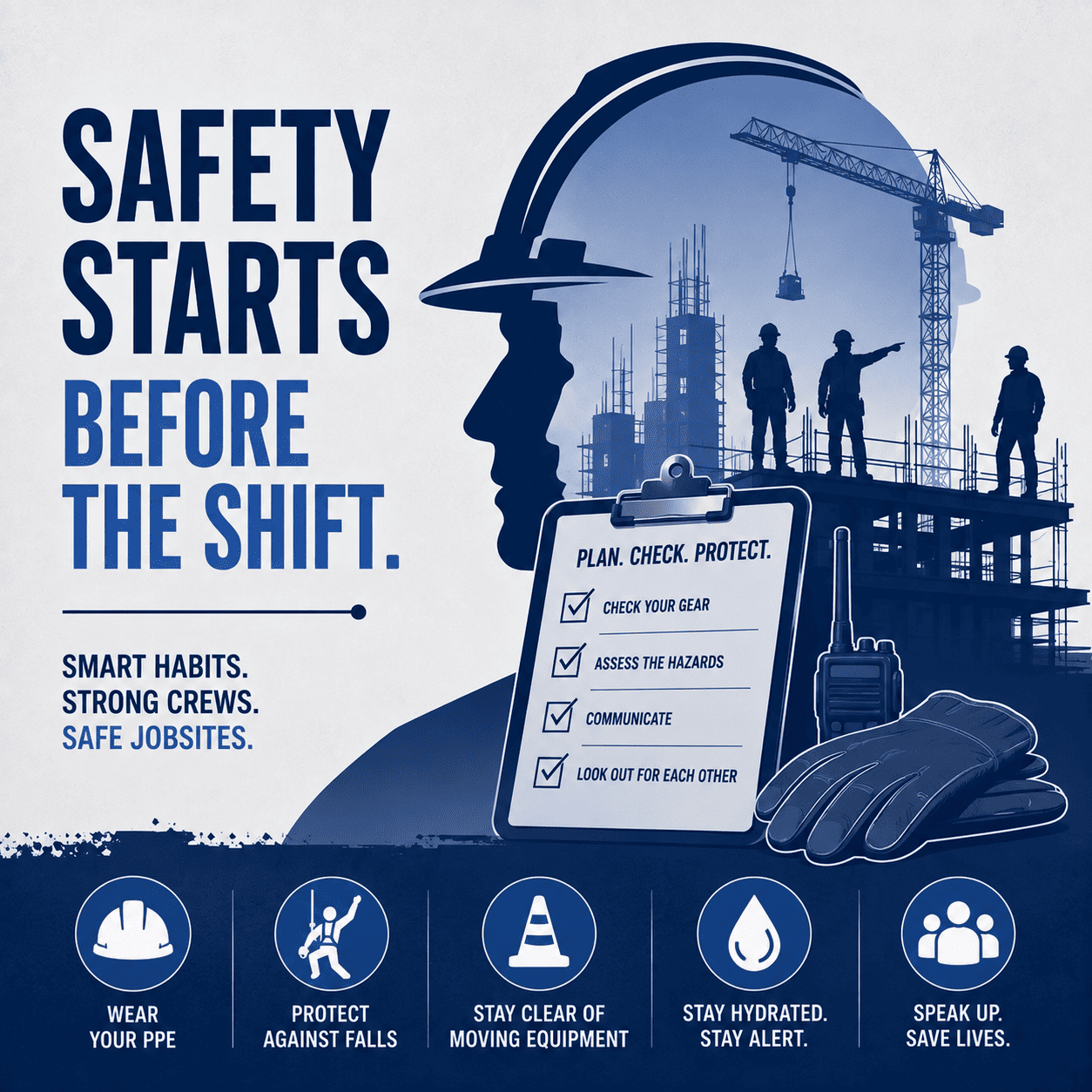
Do you ever walk onto a jobsite and feel that something looks off, but the schedule keeps everyone moving anyway? Trust that feeling. It may protect you or someone beside you.
The Bureau of Labor Statistics recorded 1,032 fatal injuries among construction workers in 2024. Falls, slips, and trips caused 370 of those deaths. OSHA also reported that fall protection remained the most cited standard in fiscal year 2025, with 6,992 citations.
These numbers are not just reports. They represent real crews, real families, and projects that changed overnight.
We built this guide for members who want practical construction safety tips they can use before the next shift starts. Good safety also protects your paycheck, because strong risk management helps keep projects moving.
Why Skilled Crews Still Get Hurt on Well-Run Projects
Most injuries do not happen because someone does not care. Small gaps often build up before the first lift of the day. A ladder shifts. A signal person moves outside an operator’s line of sight. A guardrail stays down too long.
Here are common gaps we see across union jobsites:
- Crews inherit equipment from another trade and do not inspect it before use.
- Workers remove guardrails for a delivery, then replace them hours later.
- Long shifts reduce attention before anyone wants to admit they feel fatigued.
- Nobody takes control of the swing radius around moving equipment.
- Workers spot a hazard but assume a supervisor already knows.
Construction Safety Tips That Match the Deadliest Hazards
Good habits should address the risks that hurt workers most often. When we focus on those risks, we protect more than a checklist. We protect the crew.
Control Heights Before You Climb
Falls can happen fast, so check the setup before you leave the ground.
- Inspect anchor points, lanyards, and harness stitching each morning, not weekly.
- Confirm that the ladder extends at least three feet above the landing before you climb.
- Cover or rail every floor opening as soon as the deck goes down.
- Refuse a scaffold with missing planks, and report it right away.
Stay Visible Around Moving Equipment
Transportation incidents caused 244 construction deaths in 2024. That makes visibility a daily safety practice, not a small detail.
Wear high visibility apparel that stays clean enough to be seen. Make eye contact with the operator, wait for the signal, and never enter the swing radius until the operator knows where you are.
Respect Heat, Fatigue, and Long Hours
Heat and fatigue make good workers miss things they would normally catch. Plan for them early.
- Set work and rest cycles before the temperature climbs.
- Drink water on a schedule instead of waiting until you’re thirsty.
- Raise fatigue concerns during the morning briefing, when crews can still act on them.
- Rotate demanding tasks so one worker does not carry every heavy lift.
Who Owns Each Hazard on the Jobsite?
Hazard | What You Check | Who Acts on It |
Fall exposure | Anchors, guardrails, openings | Worker and foreman |
Struck-by equipment | Sightlines, signals, high-visibility apparel | Operator and spotter |
Heat stress | Water, shade, rest cycles | Contractor and steward |
Electrical contact | Lockout status, clearances | Qualified person |
Project wide risk | Coverage, bonding, claims | Contractor and insurer |
How Risk Management Protects Union Contractors and Workers
Safety on the deck works better when the project has proper coverage underneath it. Ullico Construction Risk Services offers construction insurance and bonding programs for developers and contractors who use skilled labor. Ullico Casualty Group and NFP provide that portfolio jointly, including wrap-ups, surety bonds, environmental policies, and other coverage projects need.
That structure matters in practical ways:
- A wrap-up program can place eligible contractors under one coordinated insurance program, which can reduce disputes over which policy responds after an injury.
- The Alternative Dispute Resolution clause helps contractors manage rising insurance costs while supporting the use of skilled labor.
- Surety bonding helps keep projects on track by guaranteeing performance and protecting against contractor default, which can reduce costly disruptions.
Ullico is the only labor-owned insurance and investment company in the country. The American Federation of Labor founded it in 1927. We are proud to count Ullico among the supporters of ULA Network.
Speak Up Early and Document What You See
Most issues resolve faster on site. Still, raising workplace concerns publicly, including to reporters, remains appropriate in certain circumstances.
Photograph the hazard, note the date and time, and report it to your steward the same day. Our legal resources for union members can help if a report goes nowhere. You can also build on these construction safety tips with the right credentials by reviewing why safety certifications matter in construction.
Protect the Crew That Protects the Work
You already carry the skill. Add these habits, and you carry better odds into every shift.
We built ULA Legal Support Services Network to connect union members with vetted legal support. Share this guide at your next toolbox meeting. Then contact our team and tell us what your members need next. We will help bring the right resource forward.
Frequently Asked Questions
1. What are the four leading causes of construction injuries?
Falls, struck-by incidents, caught-in or -between hazards, and electrocutions cause most serious injuries in construction. Contractors call these the focus four. Cover them first in every daily briefing.
2. Who holds responsibility for jobsite safety on a union project?
Employers carry the legal duty to provide a safe workplace under OSHA rules. Stewards and members should report hazards as soon as they see them. Strong projects need both roles working together.
3. How does insurance coverage affect an injured construction worker?
Proper coverage affects how quickly medical care and wage benefits reach you. Wrap-up programs place covered contractors under one plan and can reduce disputes between carriers. Confirm which program covers your project.
4. Can a worker refuse unsafe work in construction?
You have the right to refuse work that presents a genuine risk of serious harm when no safer option exists. Report the condition to your supervisor and steward immediately. Keep written notes of every conversation.
5. What should I do in the first hours after a jobsite injury?
Seek medical care, then report the injury to your employer in writing that same day. Photograph the scene, collect witness names, contact your local, and review your options before you sign anything.