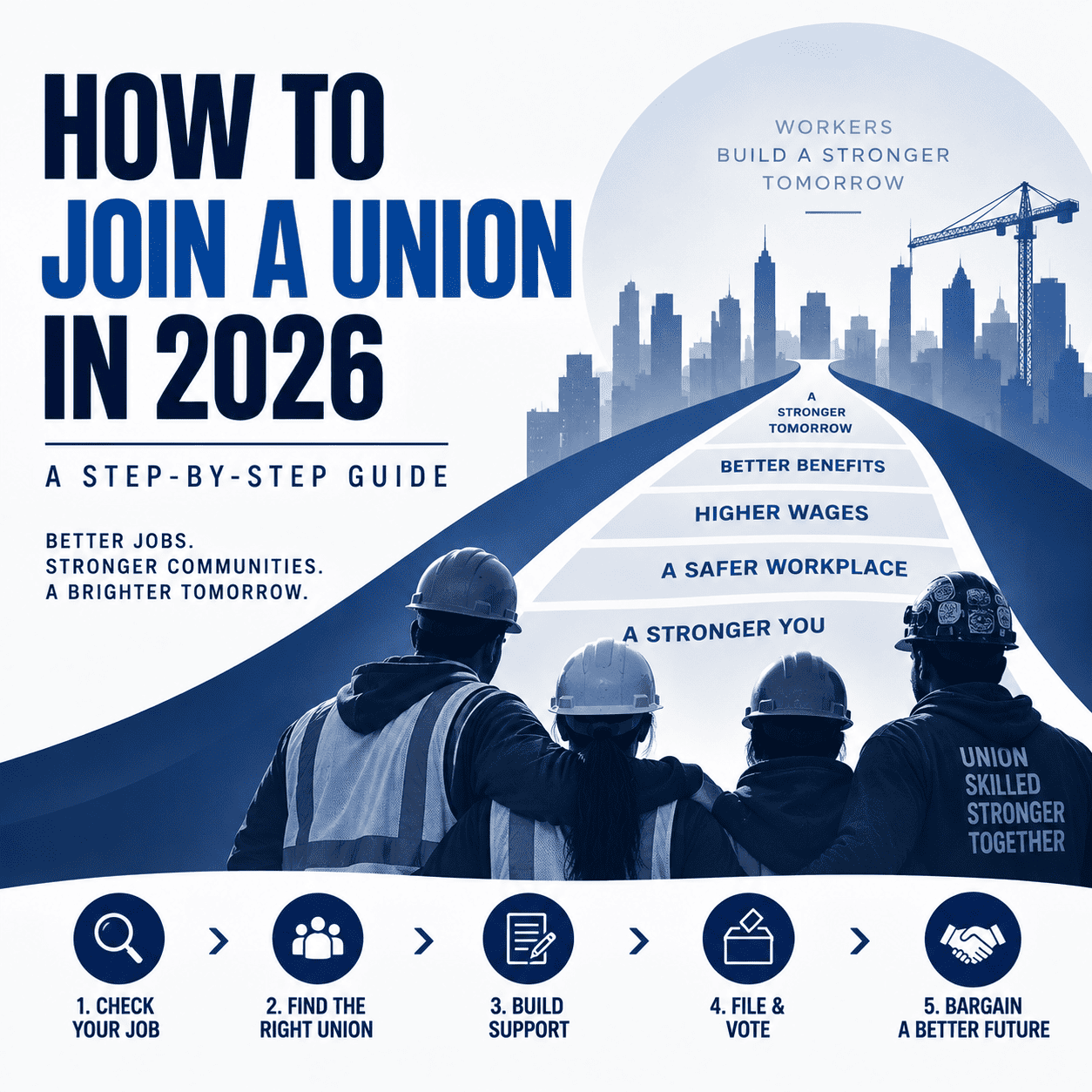
Are you doing the same work as the person beside you, yet earning less, with no pension and no clear path to a raise?
If you’re wondering how to join a union, the first step is finding out whether a union already represents your workplace. If it does, contact the local and complete its membership process. If no union represents your workplace, you and your coworkers can organize, collect support, and vote in a union.
Union membership remains a significant part of the American workforce. The U.S. Bureau of Labor Statistics counted 14.7 million union members in 2025, with the union membership rate holding at 10.0%. Full-time union members had median weekly earnings of $1,404 compared with $1,174 for nonunion workers. Unions also won 81.9% of union elections in fiscal year 2025.
Step 1: Check Whether a Union Already Covers Your Job
Many workers are already part of a bargaining unit. A bargaining unit is a group of employees that a union represents for collective bargaining at a workplace.
Start with the basics:
- Check your employee handbook, pay stub, or workplace materials for information about a collective bargaining agreement.
- Ask a longtime coworker which union local represents your job title, department, or shift.
- Contact the local to ask about union membership, union dues, and any initiation fees.
If a union already represents your job, the local can explain what steps you need to take next. This is often much simpler than organizing a new bargaining unit and seeking union representation.
Step 2: Match Your Trade or Industry to the Right Union
The right union is usually based on the type of work you do, not just the name of your employer. Our ULA Network resource library can help you find the right affiliate for your trade or industry.
Here are a few examples of how different types of work can connect to different unions:
- Construction work often connects through North America’s Building Trades Unions and its affiliates.
- Public employees, healthcare aides, and property service workers may fit SEIU or AFSCME.
- Freight, transit, and warehouse workers may fit a Teamsters local such as Local 282.
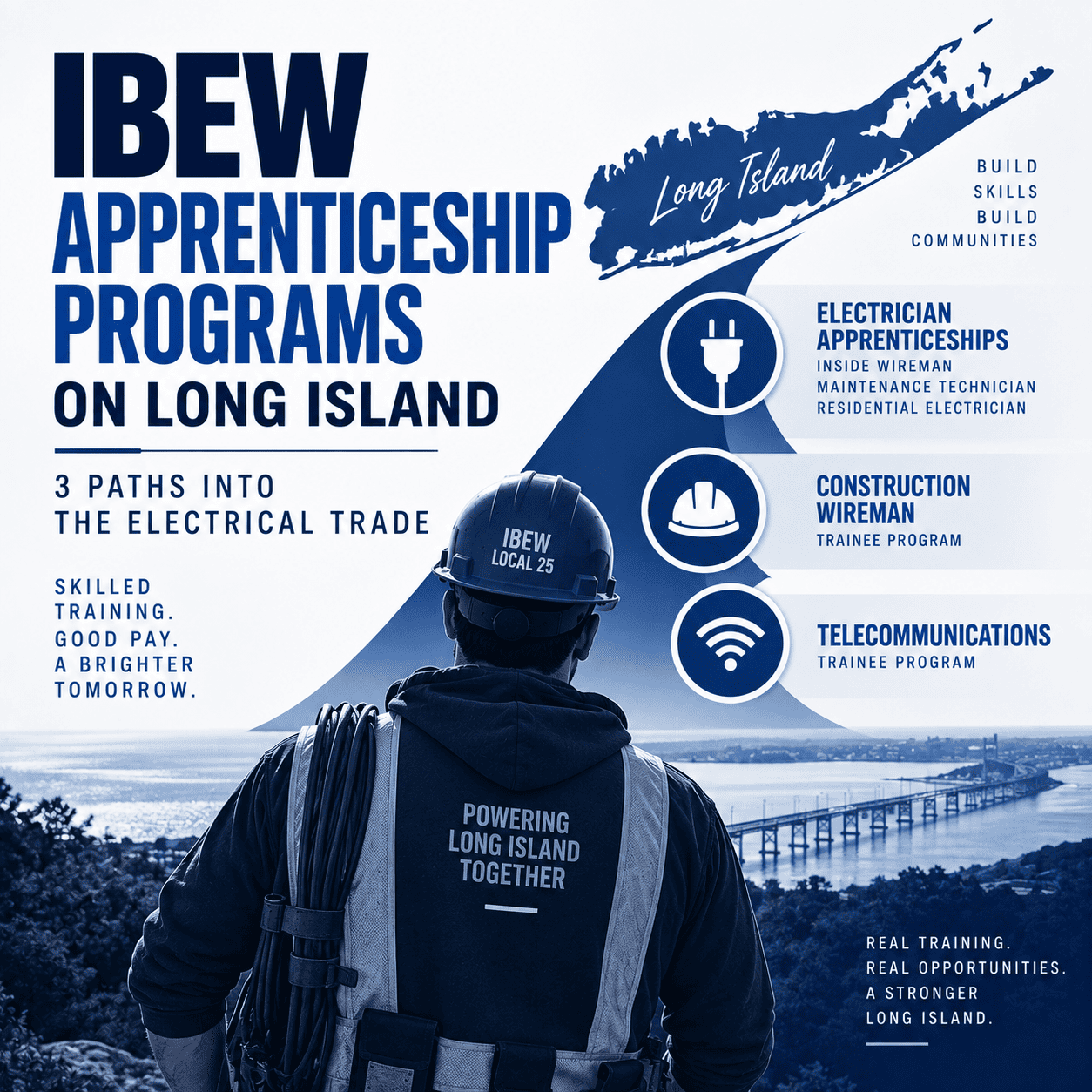
- Electrical and masonry careers can connect with locals such as IBEW Local 25 and BAC.
The best local for you will understand your job, pay structure, training path, and working conditions.
Step 3: Build Support and Sign Authorization Cards
If your workplace is not currently unionized, you and your coworkers can work together to organize.
First, speak with coworkers you trust. Keep the conversation focused on real issues, such as pay, safety, schedules, healthcare, or respect at work. Then build an organizing committee with workers from each shift, department, and language group.
As coworkers begin to support the effort, they can sign authorization cards showing that they want union representation. These cards usually include a name, employer, job title, and date. Federal rules require support from at least 30% of employees in the proposed bargaining unit before an NLRB election petition can move forward.
In practice, organizers often aim for much higher support—typically well over 70% – before filing. Building that stronger level of support can help workers stay united throughout the organizing and election process.
Step 4: File the Petition and Prepare for the Election
Once enough support has been built, an eligible petitioner can file Form NLRB-502 with the National Labor Relations Board. The Board reviews the petition, determines whether there are questions about the appropriate bargaining unit, and moves the case through the election process.
The process generally follows these stages:
Stage | Who Acts | Typical Timing |
Cards signed | Organizing committee | 4 to 12 weeks |
Election held | NLRB agent | 3 to 6 weeks |
Certification | NLRB office | 1 to 2 weeks after tally |
Public-sector employees often follow a different process through a state or local labor relations agency. Check the rules that apply to your employer or agency before you begin.
Step 5: Vote, Certify, and Bargain the First Contract
The union election is conducted by secret ballot, and the result is generally decided by a majority of the votes cast. That makes turnout important.
If the union wins and is certified as the employees’ representative, the employer and union must begin bargaining in good faith. The goal is to negotiate a first contract covering wages, hours, benefits, safety, and other working conditions.
Know Your Rights Before You Organize
Section 7 rights under the National Labor Relations Act protect many private-sector workers when they act together to improve their pay or working conditions. This includes discussing wages, hours, and workplace concerns with your coworkers.
Employers generally cannot lawfully retaliate against workers for protected union activity. For example:
- They may not fire, demote, or reassign you because of union activity.
- They may not promise raises or benefits to stop an organizing effort.
- They may not threaten workers because they support a union.
An unfair labor practice can happen when an employer or union violates workers’ rights under federal labor law. If you believe a violation has occurred, keep notes with dates, names, and exact statements.
Not every worker is covered by the NLRA. Supervisors, independent contractors, farmworkers, household workers, and most public employees do not fall under this federal law. Railroad and airline employees are covered by the Railway Labor Act instead.
Falling outside the NLRA does not close the door. Public employees organize through their own state board, and the rules change from state to state, so check yours before you collect a single card. Railroad and airline employees file with the National Mediation Board, which runs its own election process. Farmworkers and household workers can still organize together, and several states now protect them by statute.
Our legal resources can connect you with counsel who work with the labor community.
Joining Through a Registered Apprenticeship
New workers can enter the building trades through a joint apprenticeship and training committee. A registered apprenticeship lets you earn a paycheck while learning through a combination of on-the-job training and classroom instruction.
Many programs charge no tuition, but you should confirm the costs, requirements, and application dates with the program sponsor. The process generally involves:
- Meeting the age, education, and documentation requirements set by the local or program.
- Taking the aptitude test and completing the panel interview.
- Finishing classroom training and supervised on-the-job training.
- Progressing toward journeyworker status as you build skills and experience.
If you’re still comparing your options, our members explain why a union apprenticeship beats nonunion work. Veterans can also explore Helmets to Hardhats, which helps connect transitioning service members with career opportunities in the construction industry.
Our Vets4Vets Community Construction Project also brings veterans and apprentices together through community-focused construction projects.
Your First 90 Days as a Member
Meet your steward, learn the contract, and make sure you understand how to access your benefit fund. You can also explore our financial resources to plan for your first union paycheck.
Take the First Step With People Who Know the Ground
Joining a union can affect your paycheck, healthcare, retirement, and future at work. Still, many workers get stuck simply because they cannot find the right local or the correct application window.
The ULA Network helps close that gap through guides, trade resources, and conversations with union leaders who understand this path.
Ready to take the next step? Contact our team with your trade and state, and we can help point you toward relevant resources.
Frequently Asked Questions
1. How Long Does the Process Take From the First Meeting to Certification?
Most campaigns take 3 to 6 months from the first meeting to certification. Card signing often takes the longest. The vote may happen 3 to 6 weeks after filing, although disputes can extend the process.
2. Can My Employer Fire Me for Signing an Authorization Card?
No. Federal law generally protects card signing as a concerted activity. If retaliation happens, you can file an unfair labor practice charge with your NLRB regional office.
3. What Do Union Dues Actually Cost?
Rates vary by local and are set according to that union’s rules. Some locals base monthly dues on a member’s hourly wage or a set amount. Building trades locals may also charge a one-time initiation fee.
4. Do I Need Every Coworker to Agree Before We File?
No. A majority of the votes cast decides the result. Still, most organizing committees build support well above the 30% legal minimum before filing.
5. Can I Join a Union as an Individual if My Employer Stays Nonunion?
Sometimes. You may be able to join certain unions as an individual, but membership alone does not give the union the right to bargain with your employer. For collective bargaining to occur, the union generally must represent the appropriate group of workers. You may also be able to enter a union apprenticeship or apply for work through a union local.