
Climate Jobs Oregon: Building a Union Pathway to a Clean Energy Future
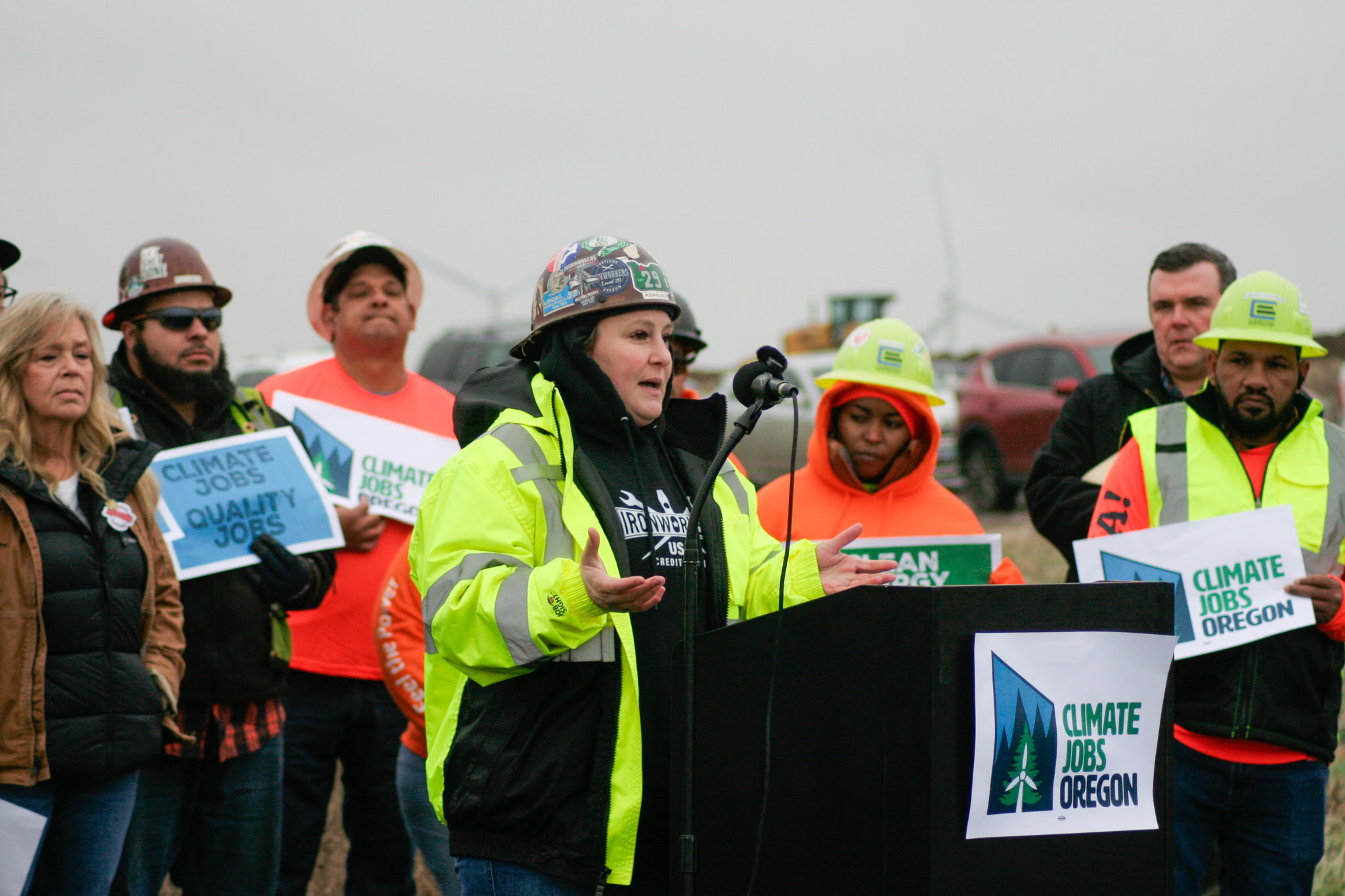
Credit: AFL-CIO / Climate Jobs Oregon
Oregon’s labor movement is making it clear: the transition to clean energy must be built by union workers, with union standards, and for working families.
This week, labor leaders from across the building trades came together at a press conference to announce the launch of Climate Jobs Oregon, a new statewide coalition focused on aligning Oregon’s clean energy goals with high-road union jobs. The coalition is advocating for policies that expand the number of skilled union tradespeople needed to meet the state’s climate targets—while also lowering utility bills and strengthening local economies.
A Broad, United Labor Coalition
Climate Jobs Oregon brings together a powerful alliance of labor organizations, including:
- Oregon AFL-CIO
- Oregon State Building and Construction Trades Council
- International Brotherhood of Electrical Workers Local 48, International Brotherhood of Electrical Workers Local 125, and International Brotherhood of Electrical Workers Local 932
- International Union of Operating Engineers Local 701
- Ironworkers Local 29
- Laborers Local 737
- Oregon and Southern Idaho District Council of Laborers
- SMART Local 16
- United Association Local 290
Together, these unions represent the electricians, operating engineers, ironworkers, laborers, sheet metal workers, and plumbers and pipefitters who will physically build Oregon’s clean energy infrastructure—from wind and solar to grid modernization and energy-efficient buildings.
Policy Built With Workers at the Table
Labor leaders didn’t stop at rhetoric. The coalition partnered with the Cornell University School of Industrial and Labor Relations Climate Jobs Institute to develop a set of concrete policy recommendations aimed at scaling clean energy responsibly and efficiently.
Key priorities include:
- Increased investment in union apprenticeship programs to ensure a highly trained, job-ready workforce
- Formal collaboration with labor unions to expedite site permitting, avoiding delays while maintaining safety and quality
- Strong labor standards that guarantee fair wages, benefits, and retirement security
This approach recognizes a simple truth: ambitious climate goals require a massive, skilled workforce, and that workforce must be trained, protected, and respected.
“Those Are Union Jobs”
At the press conference, Graham Trainor, President of the Oregon AFL-CIO, put it plainly:
“To meet our climate goals, Oregon needs a massive increase in workers, and those workers must be trained to the highest caliber and safety standards, where they have a meaningful voice on the job, where they have career pathways for advancement and they have wages, benefits, and a retirement plan to support their families and get them into the economy long term. Let’s be crystal clear: Those are union jobs.”
It’s a message that resonates far beyond Oregon. Clean energy isn’t just an environmental issue—it’s a workforce, economic development, and equity issue. When projects are built union, communities benefit from safer jobs, stronger training pipelines, and dollars that stay local.
Why This Matters to the Union Labor Community
At the ULA Network, we see Climate Jobs Oregon as a model for how states can move from clean energy ambition to clean energy execution—without leaving workers behind. By embedding labor at the center of climate policy, Oregon is showing that economic growth, energy affordability, and worker power don’t compete—they reinforce one another.
As clean energy investment accelerates nationwide, coalitions like Climate Jobs Oregon offer a roadmap:
union labor + smart policy + education and apprenticeships = sustainable progress.
Credits & Acknowledgments
This article is informed by reporting and statements from Oregon labor leaders and organizations announcing the launch of Climate Jobs Oregon, with policy analysis developed in collaboration with the Cornell University School of Industrial and Labor Relations Climate Jobs Institute. The ULA Network thanks the editorial writers, labor organizations, and research partners whose work helps elevate the role of union labor in building a clean energy future.
Support. Educate. Promote.
The ULA Network would like to thank our sponsors and supporters for believing in our mission to support educate and promote our union labor family and our communities. To learn more visit: https://www.ulanetwork.com/supporters
Sponsors






















Subscribe to our monthly newsletter:
Get notified about impactful Labor events, news, interviews, and more.