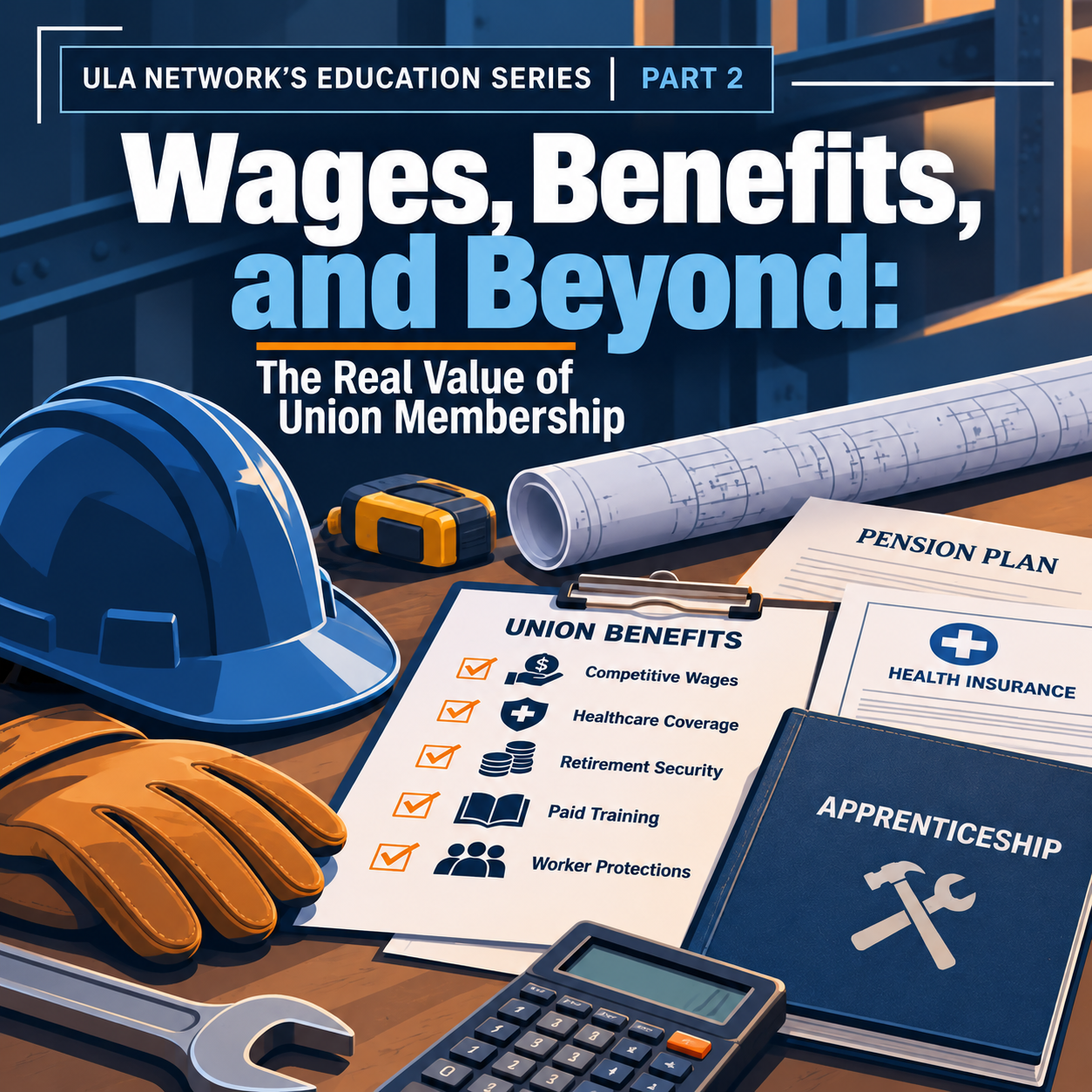
There’s a persistent myth that the only path to a stable, well-paying career runs through a four-year degree. Union apprenticeship programs quietly disprove that myth every single day — training skilled tradespeople through structured, paid, earn-while-you-learn programs that lead directly into careers, not just jobs.
For union leadership and organizers, the apprenticeship story is one of the most powerful recruitment and community education tools available. It answers the question every parent, career-changer, and young person is actually asking: how do I build a stable future without going into debt to do it?
What a Union Apprenticeship Actually Looks Like
Union apprenticeship programs combine on-the-job training with structured classroom instruction, typically over three to five years depending on the trade. Apprentices work under experienced journeyworkers, earning a percentage of full journeyman wages that increases at set milestones as their skills progress.
This matters because it flips the traditional education model. Instead of paying tuition and taking on debt before earning a dollar, apprentices are paid from day one — and that pay grows predictably as competency grows.
A Real Career Ladder
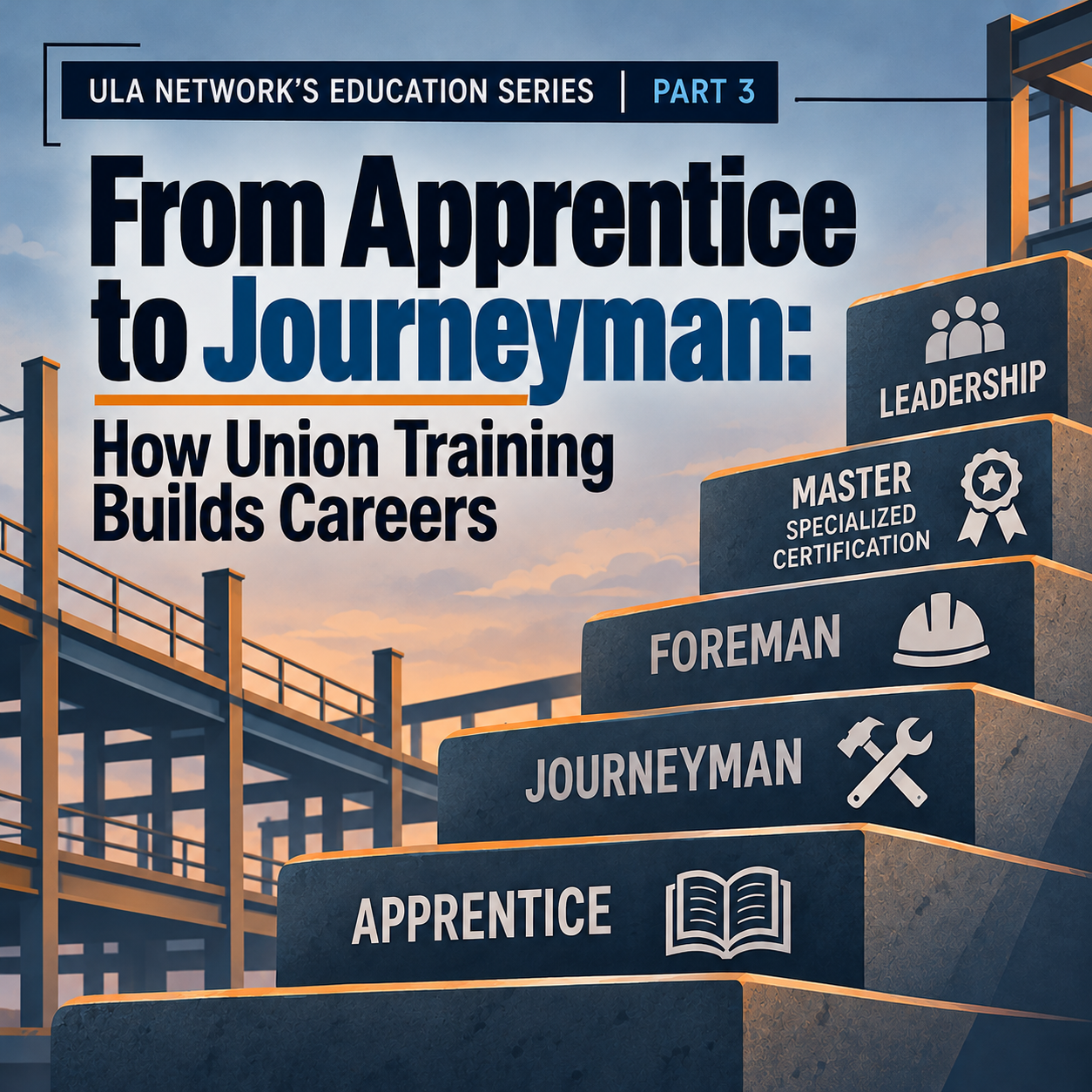
The apprentice-to-journeyman path isn’t just about learning a skill. It’s a structured ladder:
- Apprentice — paid training, mentorship, classroom instruction
- Journeyman/Journeyworker — full wages, full scope of trade work
- Foreman/Supervisory roles — leadership on the jobsite
- Master or specialized certification — advanced trade authority
- Instructor or union leadership roles — for those who want to train the next generation
Very few career paths outside the trades offer this kind of clear, verifiable progression — where every step is tied to demonstrated skill rather than credentialing that may or may not reflect actual ability.
Who This Reaches
Union apprenticeship programs are particularly powerful pathways for:
- Veterans, whose military training and discipline often translate directly into trades work — many programs offer accelerated tracks or credit for military experience
- Young people exploring alternatives to traditional four-year college
- Career-changers looking for stable, skilled work without starting over financially
- Community members in areas historically underserved by traditional workforce pipelines
Programs that partner apprenticeship pathways with local schools, veterans’ organizations, and workforce boards extend that reach even further — turning a single training program into a community-wide pipeline.
Why This Story Needs to Be Told Better
Too often, the apprenticeship pathway is treated as insider knowledge — something people learn about only if they already know someone in the trades. That’s a communications gap, not an access gap. The programs exist. The paid training exists. What’s often missing is the outreach that puts that information in front of the people who need it most, in language that speaks to their actual concerns: debt, stability, and a real path forward.
For Organizers: Making the Pathway Visible
- Show the earnings timeline. A visual of apprentice wages climbing toward journeyman pay is more persuasive than any brochure.
- Partner locally. Schools, veterans’ service organizations, and community centers are natural distribution points for apprenticeship information.
- Feature real graduates. A journeyman who started as an 18-year-old apprentice is the most credible spokesperson your program has.
- Make the application process visible and simple. Confusion about how to apply is one of the biggest silent barriers to enrollment.
The apprenticeship system is, in many ways, organized labor’s best-kept secret. It shouldn’t be a secret at all.
This post is part of ULA Network’s community education series, developed to help union leadership and organizers communicate the value of apprenticeship and workforce pathways across the trades.