
Are you wondering which trade pays the most before you apply for an apprenticeship? Elevator and escalator installers are the highest-paying trade on this list, with a median annual wage of $109,910 in May 2025. The top 10% earned more than $158,890, according to the U.S. Bureau of Labor Statistics.
That wage stands out for a reason. But the work can put you in a narrow elevator shaft, a machine room, or an urgent repair call at the end of a long day. It takes skill, careful testing, and years of training. So, if you are choosing a trade, look past the biggest number and look at the work behind it.
The U.S. median wage includes union and nonunion workers. Still, union members had median weekly earnings of $1,404 in 2025, while nonunion workers earned $1,174, according to the U.S. Bureau of Labor Statistics. Your own union wage comes from a local collective agreement. That is why a U.S. table can guide you, but it cannot promise your exact paycheck.
Top Paying Union Trades in 2026: The Wage Table
| Trade | Median annual wage | Top 10% earn more than |
| Elevator and escalator installers | $109,910 | $158,890 |
| Electrical power-line installers | $95,320 | $128,690 |
| Boilermakers | $76,410 | $110,370 |
| Plumbers, pipefitters, steamfitters | $63,800 | $108,420 |
| Electricians | $63,190 | $108,510 |
| Structural iron and steel workers | $62,780 | $108,260 |
| Construction equipment operators | $59,600 | $100,660 |
Source: BLS Occupational Outlook Handbook.
Union Pay Scale: What the Hourly Rate Leaves Out
Most people see the median wage first, and you should too. Yet the hourly number does not show every part of your union pay.
Your union pay scale can change by local, jobsite, shift, and work type. A journeyman in the same trade may earn a different total because one job has overtime or travel while another does not. Your union scale may include:
- Health coverage funded through employer contributions for each covered hour.
- A pension and an annuity that grow with covered work hours.
- Overtime, shift premiums, travel pay, and a higher foreman rate.
- A paid union apprenticeship with scheduled raises as an apprentice gains hours and skills.
Dispatch rules and emergency call-outs matter too. If the local has steady shutdown work, night work, or storm work, your weekly union wage may rise fast. However, read the collective agreement before you count on any premium. If retirement benefits are important to you, your union pension before you retire explains what to check.
Best Paying Trade Jobs Ranked: Where Six Figures Become Possible
The first row on a wage table does not mean the work is easy. Elevator constructors install, maintain, test, and repair lift systems that must meet code rules. They also carry serious safety duties, so their pay reflects a skilled trade.
Electrical power-line installers and repairers come next, with a median annual wage of $95,320. Many of these skilled workers are represented by IBEW, which represents workers in utilities and construction. They work around high-voltage power systems, climb poles or use bucket lifts, and may travel after storms. The U.S. Bureau of Labor Statistics notes that emergencies can bring long hours. Boilermakers earn $76,410 across the U.S. and may work extended overtime during plant turnarounds or repair shutdowns.
- Electricians, plumbers, pipefitters, and steamfitters can all pass $108,000 at the top end of the U.S. wage range.
- Structural iron and steel workers, often called ironworkers, can reach $108,260 on bridge, high-rise, and heavy civil work.
- Construction equipment operators, also called operators, can earn more than $100,000 on major crane, road, and civil projects.
- Line work and inside electrical work both run through IBEW locals across the U.S.
IBEW Career Paths for Line Workers and Electricians
The International Brotherhood of Electrical Workers (IBEW) represents approximately 901,000 active members and retirees and has represented electrical workers since 1891. Its utility branch includes power-line work, giving line apprentices access to an established union structure built around training, representation, and careers across the electrical industry.
- The IBEW Utility Department assists more than 250 local unions and supports over 200,000 utility workers.
- Seven branch departments cover utility, construction, telecommunications, broadcasting, manufacturing, railroad, and government work.
- These branches offer opportunities across different areas of the electrical industry.
- Every rate, benefit fund, and training standard comes from a collective agreement, not a manager’s decision.
That range matters when the storm season ends or one project wraps up. A line worker with an IBEW card can look at utility work, substation work, or data center work in the same hall.
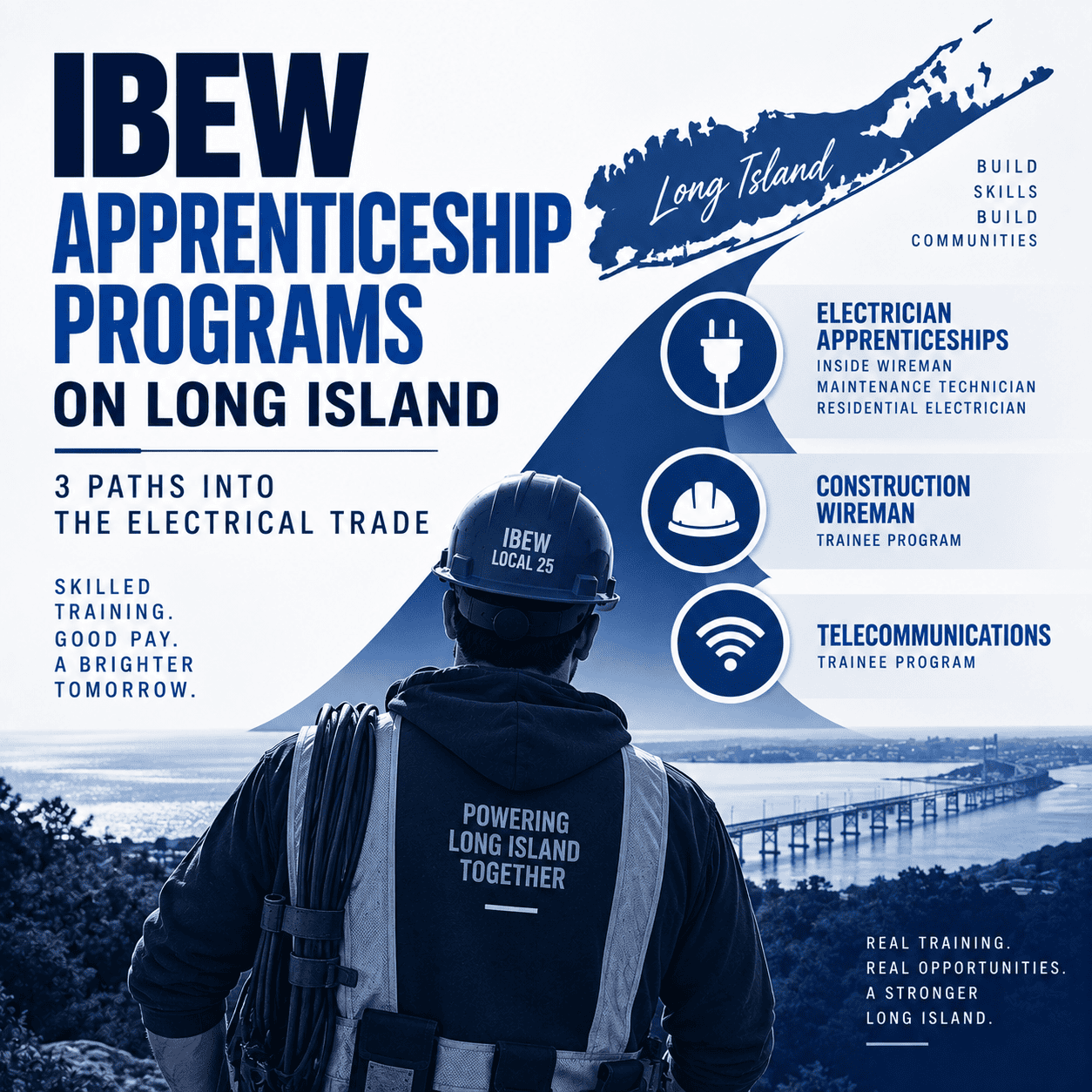
John Guadagno, president of IBEW Local 25, told ULA Network that his local has held full employment for nearly a decade. He entered the Local 25 apprenticeship in 1983 and now serves as its longest-serving president. Apprentices there earn while they learn, train under experienced electricians, and finish without college debt.
Union Trade Jobs With Strong 2026 Demand
The best union trade jobs are tied to work that crews can see on the ground. Data center construction requires large electrical crews, creating opportunities for IBEW locals and their members. Grid upgrades and clean energy projects can also create work for electricians, line crews, and operators. Still, a signed project in your area matters more than a big headline. The data center construction boom shows why this work is growing in the Northeast.
How to Reach the Top of the Union Scale Faster
Six figures usually come after you build useful skills, not after one good week. Your rate grows with hours, classroom credits, and the jobs that your local trusts you to handle. If you treat the apprenticeship as a career path, every class can make your next call more valuable.
- Use every JATC class you can, especially code updates and welding tickets.
- Take call outs, night work, or shutdown work if the rate and travel fit your life.
- Keep your OSHA card and craft credentials current, so dispatch does not pass you over.
- Step into foreman work when your hours, skills, and local rules qualify you.
Your Next Raise Starts With the Right Local
Choosing among the highest paying union jobs comes down to 3 questions. Which craft fits your hands? Which local holds the work? Which agreement funds your benefits well?
A wage table gives you the broad picture, but a training director can show you the real path in your county. At ULA Network, we help members find clear facts about pay, training, and openings. Our supporters keep that help free. Share the craft you want and your county, then Contact our team this week to find the right local.
Frequently Asked Questions
1. What Is the Highest Paying Union Job in 2026?
Elevator and escalator installers lead this U.S. wage list. Their median annual wage was $109,910 in May 2025, and the top 10% earned more than $158,890. Your rate may be higher or lower because your local agreement controls the actual scale.
2. Which Union Trade Reaches Six Figures the Fastest?
Elevator work and electrical power-line work have the highest U.S. wage levels on this list, and IBEW locals dispatch most of that line work. But reaching six figures depends on your local union scale, overtime, shift premiums, travel pay, and the work your local has. A journeyman path often takes 3 to 5 years, depending on the craft and program.
3. Do Union Apprentices Earn Wages While They Train?
Yes. A registered apprenticeship gives you paid job training, and your rate usually rises as you finish work hours and classes. Brooke, a fourth-year apprentice with Plumbers Local 200, shared how her raises followed the hours she logged and the classes she finished.
4. Do Top Paying Union Trades Require a College Degree?
Most trade programs do not require a college degree. Still, each local sets its own entry rules. Many applicants need a high school diploma or GED, a driver’s license, and a passing aptitude test. Some programs also require algebra, a drug screen, physical ability testing, or work authorization.
5. Which Union Trades Will Add the Most Work in 2026?
Electrical, mechanical, and operating engineer work has strong reasons for demand. Data center construction, grid upgrades, and clean energy projects need skilled workers. But local work still depends on signed contracts and project timing.